
Speeches
Becoming World Class: James Nelson Encourages Students to Rise Above the “Gravity of Mediocrity”
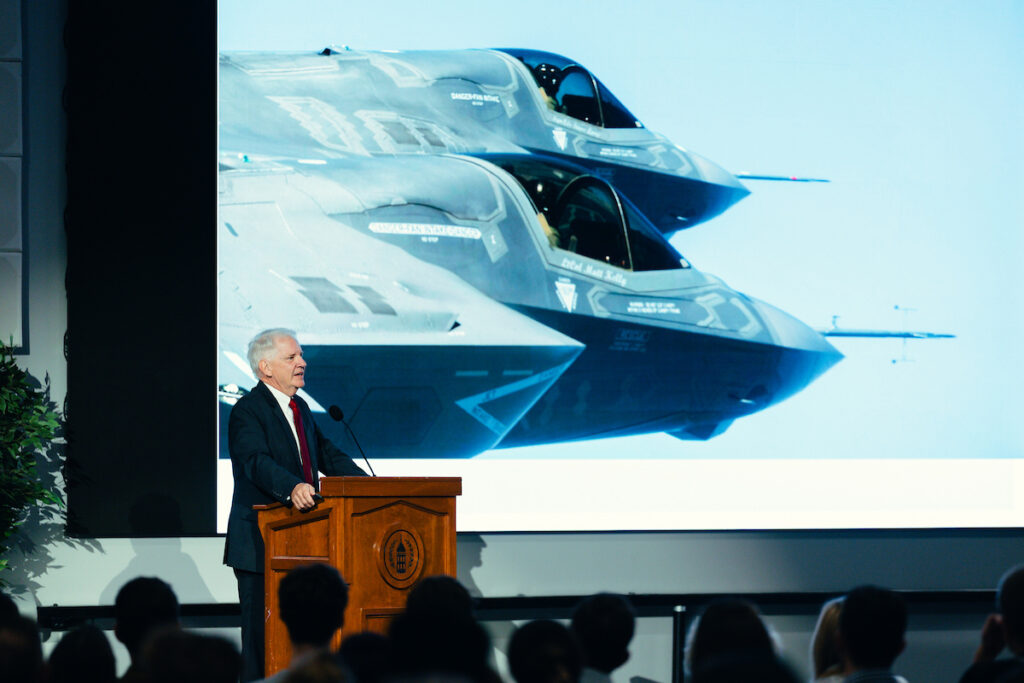
On Nov. 21, James Nelson, retired co-founder and CEO of Sunworks, Inc., visited Southern Virginia University and encouraged students to become world class in whatever they choose to do in their lives–by pursuing excellence with intention. He outlined three key elements that are often shared by people who achieve world-class performance: ignition, deep practice, and master coaching.
Nelson highlighted some individuals known for their exceptional skills, including his brother and fighter/test pilot Lt. David Nelson, French chef Anne-Sophie Pic, and former heart surgeon and president of The Church of Jesus Christ of Latter-day Saints Russell M. Nelson. He emphasized that while they are all considered world class, their mastery did not solely come from their natural abilities.
“All of these people are world class at what they do, but it didn’t just happen to them. It happened through conscious effort,” he said. “And I want you to remember this statement–you are not born with talent. You grow it.”
Nelson began with ignition, which he described as the process of finding focus, building self-belief, and developing the deep desire to be great. He also talked about following your passion and cautioned students not to ignore life’s unexpected opportunities that may become a passion.
“I used to tell people they should follow their passion. I don’t say that anymore,” Nelson explained. “Instead, I suggest that you be open to a variety of opportunities that come your way and develop a passion for those opportunities. Choose something that fits you, and be very careful about that choice.”
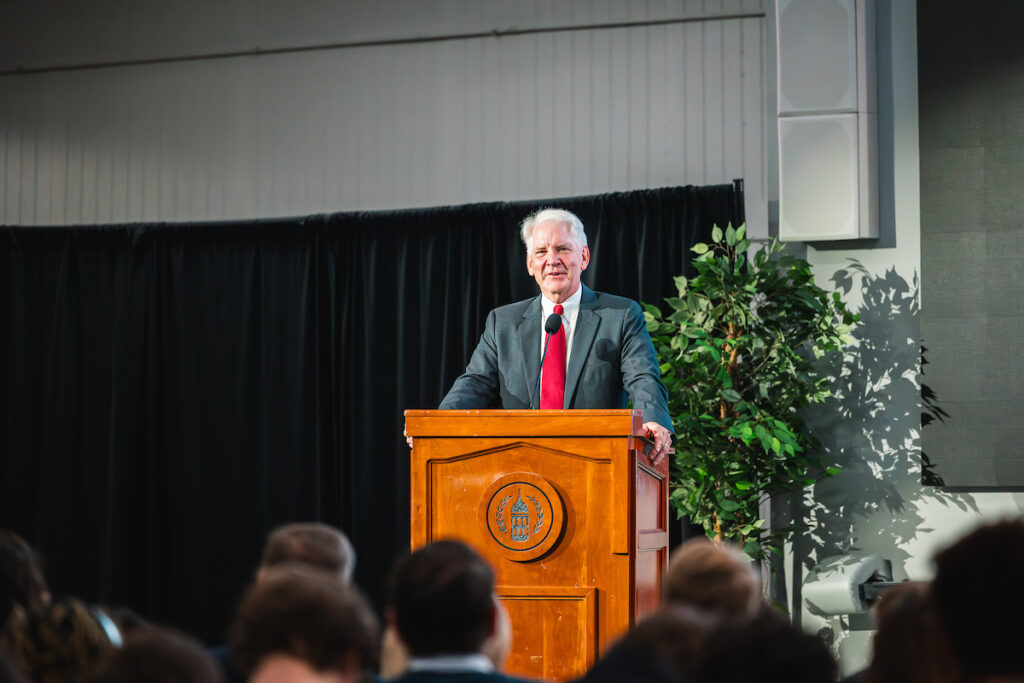
The second element, deep practice, requires breaking the path to excellence into small steps, accepting and correcting mistakes, and repeating correct actions until they become automatic. He explained how the brain reinforces repetitive behaviors by producing myelin, which strengthens neural pathways over time.
“Every time you do something, your brain reinforces that behavior by producing myelin, which then wraps around an axon. When that behavior is repeated over and over again, more and more myelin is wrapped,” Nelson said. “Whether it’s a positive or negative behavior, what the myelin does is make the next time you use that circuit easier and more accurate. Hence the importance of getting it right and doing it over and over again.”
Finally, Nelson emphasized the role of master coaching, urging students to find mentors who believe in their potential and don’t accept mediocrity and encouraged the students to consecrate their skills and time to the Lord.
“A lot of people think they can do this on their own. They are wrong,” he said. “There are forces that want to drag you down to average when you start to become great. We call this the gravity of mediocrity and it’s something you have to overcome if you’re going to be great at something.”
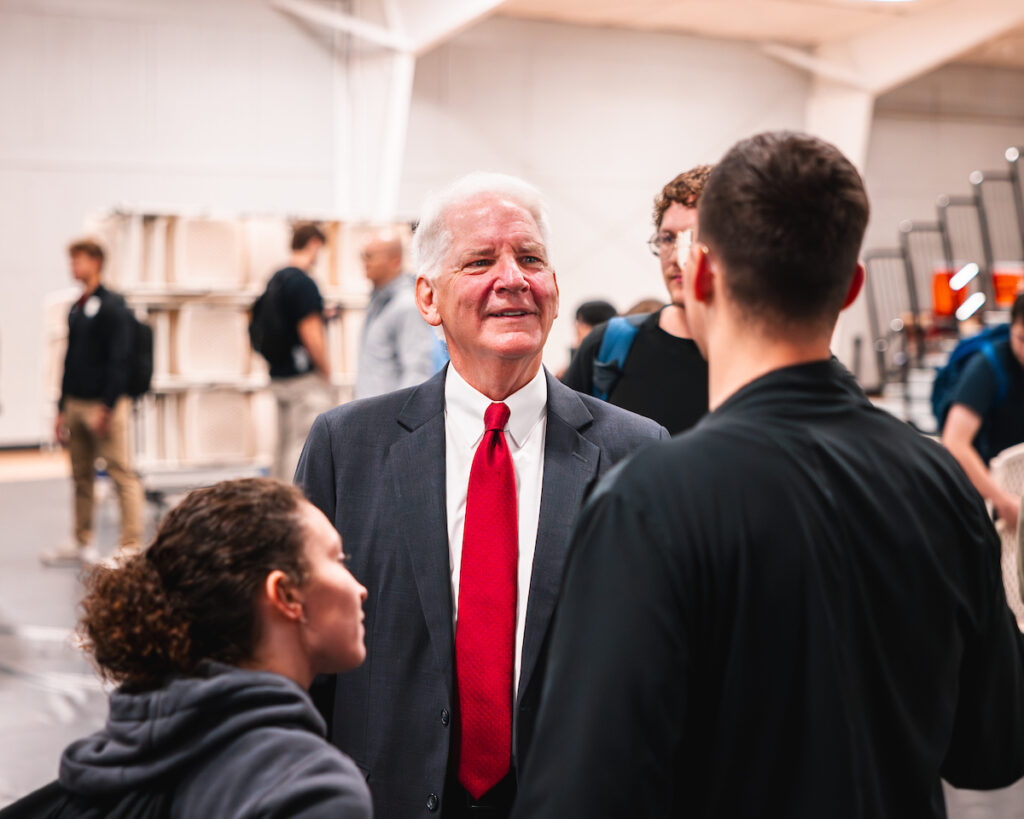
“It’s the privilege of all of us who are disciples of Jesus Christ to consecrate our time, talents, and all that the Lord has blessed us with to fulfilling the Savior’s purpose,” Nelson continued. “This isn’t always easy, but it will bless your life enormously.”
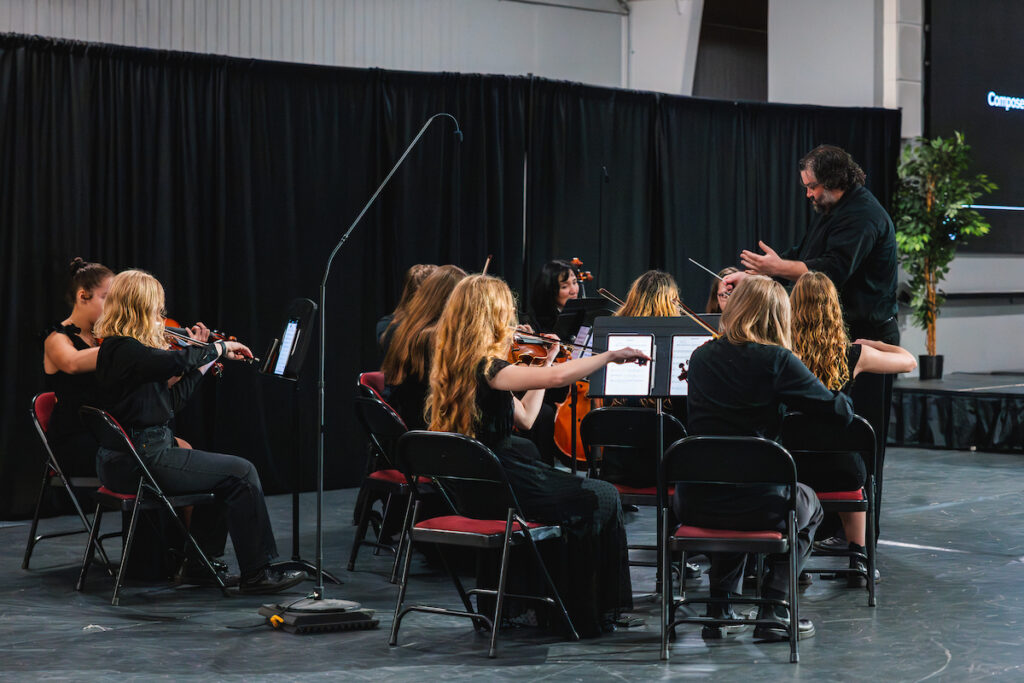
The event featured a performance of “Gravitas” by the university’s Camerata Orchestra, conducted by Professor Jakob Hofer and ended with those in attendance singing “Love One Another.”